
BPC-157
£11.00
- Multiple sizes available5 MG · 10 MG
- StockChoose a size
- Size–
- SKUBC10
- Research use onlyYes
Bundle & save
More of your chosen vial, better value.
Choose a vial size to see your savings.
Applies to the same product and vial size.
Buying for a business? Apply for a trade account
DESCRIPTION
BPC-157 – Available in 5mg and 10mg vial
Targeted Soft Tissue & Gut Repair Research Peptide
BPC-157 (Body Protection Compound-157) is one of the most extensively researched regenerative peptides, attracting significant interest for its potential role in soft tissue recovery and gastrointestinal health studies.
Derived from a naturally occurring protective protein sequence found in gastric juice, BPC-157 is commonly investigated for its effects on tendon recovery, ligament repair, muscle regeneration, vascular signalling, and gut integrity. Its broad range of research applications has made it a popular choice in regenerative and recovery-focused research protocols.
Key Features
✓Widely researched for tendon and ligament repair models
✓Studied for its role in blood vessel formation and tissue regeneration
✓Commonly investigated in muscle recovery research
✓Extensively researched for gastrointestinal and gut lining support
✓Frequently used in regenerative medicine and recovery-based studies
✓Popular component of connective tissue repair research protocols
Why Researchers Study BPC-157
Tendon & Ligament Support
Frequently researched for its potential role in connective tissue recovery and repair following injury.
Vascular Signalling
Studied for its involvement in angiogenesis (new blood vessel formation), which may help improve nutrient and oxygen delivery to damaged tissues.
Muscle Recovery Research
Investigated for its potential effects on muscle regeneration and recovery processes.
Gastrointestinal Support
Extensively studied for maintaining and repairing the digestive tract lining, making it a key focus of gut health research.
Localised Recovery Potential
Often selected in studies where targeted tissue repair and recovery are the primary focus.
How BPC-157 Works
Researchers believe BPC-157 may support recovery by influencing several biological pathways involved in tissue repair.
Studies suggest it may:
- Promote signalling associated with blood vessel development
- Support collagen synthesis and connective tissue regeneration
- Assist cellular migration to damaged tissue sites
- Influence nitric oxide pathways involved in circulation and vascular health
- Support protective mechanisms within the gastrointestinal tract
These combined mechanisms make BPC-157 a subject of ongoing interest across multiple areas of regenerative research.
Common Research Applications
BPC-157 is frequently studied in models involving:
- Tendon injuries
- Ligament damage
- Muscle strain recovery
- Joint and connective tissue research
- Gastrointestinal lining repair
- Ulcer and digestive tract studies
- Soft tissue regeneration
- Vascular healing and circulation research
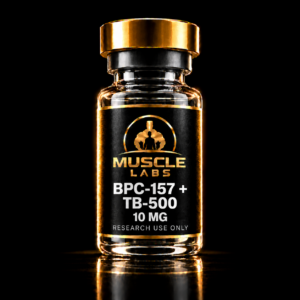
Often Paired With TB-500
BPC-157 is commonly combined with TB-500 in regenerative research protocols.
While BPC-157 is often selected for its targeted tissue repair focus, TB-500 is researched for its broader systemic effects on cellular migration, inflammation response, and recovery processes.
Together, these peptides form the basis of the popular Wolverine Blend, where researchers study their complementary effects on connective tissue repair, vascular signalling, and recovery pathways.
Product Specifications
- Product Name: BPC-157
- Peptide Type: Synthetic Research Peptide
- Research Category: Regenerative & Recovery Studies
- Primary Focus Areas: Soft Tissue, Connective Tissue & Gastrointestinal Research
- Physical Form: Lyophilised (Freeze-Dried) Powder
- Application: Research Use Only
Important Notice
For laboratory research use only – This product is intended solely for research, analytical, and educational purposes. It is not intended for human or animal consumption, therapeutic use, veterinary use, diagnostic procedures, or administration of any kind.

For laboratory research only. Not for human or animal consumption.