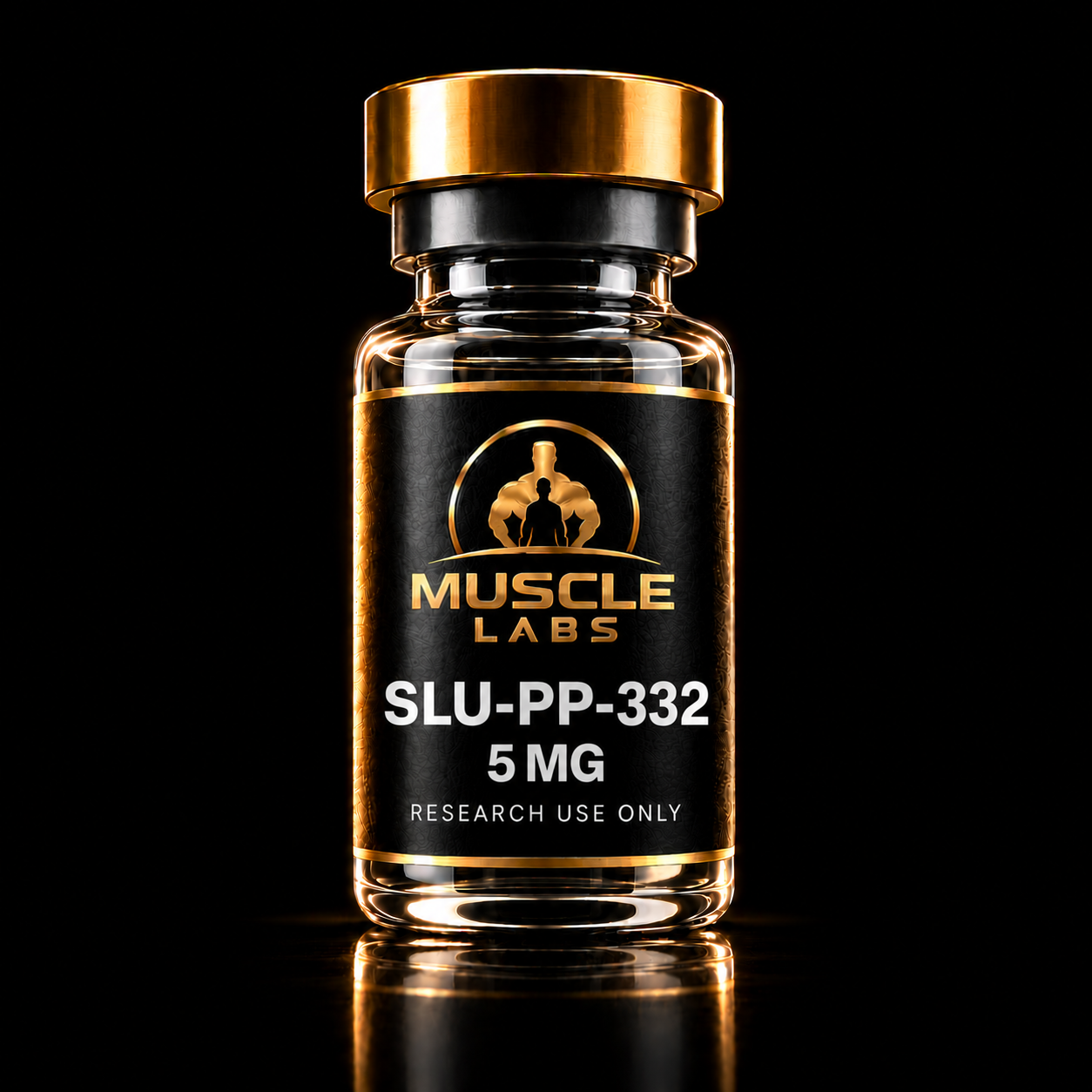
SLU-PP-332
£45.00
- Stock18
- Size5 MG
- Molecular formulaC18H14N2O2
- SKU
- Research use onlyYes
Bundle & save
More of your chosen vial, better value.
Choose a vial size to see your savings.
Applies to the same product and vial size.
Buying for a business? Apply for a trade account
DESCRIPTION
- Experimental small-molecule compound studied in metabolic research
- Investigated for activity on estrogen-related receptors (ERRs)
- Examined in research involving mitochondrial function and oxidative metabolism
- Studied in cellular energy regulation and metabolic adaptation models
- Investigated in preclinical exercise-mimetic and endurance-related research
- Relevant to experimental programmes exploring metabolism, cellular resilience, and healthy ageing
Cellular Energy Regulation
SLU-PP-332 is investigated for its influence on ERR-associated pathways involved in regulating genes responsible for cellular energy production and utilisation.
Mitochondrial Function
Researchers study its effects on pathways associated with mitochondrial activity, oxidative metabolism, and the cellular processes supporting energy production.
Metabolic Adaptation
Preclinical research has explored how SLU-PP-332 may influence metabolic processes involved in energy expenditure, substrate utilisation, and adaptive responses to changing energy demands.
Exercise-Mimetic Research
SLU-PP-332 has attracted interest in experimental models investigating molecular pathways associated with exercise-related metabolic adaptations. It is sometimes described as an exercise mimetic in the research literature, although this does not establish that it reproduces the full effects of exercise in humans.
Healthy Ageing Research
Researchers are investigating ERR signalling because of its relationship to mitochondrial function, energy metabolism, and physiological processes associated with ageing. The relevance of SLU-PP-332 to human longevity remains unestablished.
Scientific Research Context
Estrogen-related receptors, particularly ERRα, ERRβ, and ERRγ, are nuclear receptors involved in regulating genes associated with mitochondrial biogenesis, oxidative metabolism, and energy homeostasis.
SLU-PP-332 has been investigated as an agonist of ERR signalling, making it a compound of interest in studies exploring the relationship between nuclear receptor activity and metabolic function.
Research areas associated with SLU-PP-332 include:
- Mitochondrial function and oxidative metabolism
- Cellular energy homeostasis
- Fatty acid oxidation and substrate utilisation
- Metabolic adaptation and energy expenditure
- ERR-associated gene expression
- Exercise-related molecular signalling
- Preclinical models of metabolic dysfunction
- Mitochondrial biology and healthy ageing research
These pathways are important subjects in metabolic and mitochondrial biology. However, findings from cell and animal studies do not establish efficacy, safety, or longevity benefits in humans.
Common Research Applications
SLU-PP-332 is investigated in experimental models involving:
- Estrogen-related receptor signalling
- Mitochondrial activity and oxidative metabolism
- Cellular energy regulation
- Fatty acid oxidation and metabolic flexibility
- Exercise-related metabolic adaptation
- Energy expenditure research
- Metabolic health and preclinical disease models
- Mitochondrial function and ageing-related research
Commonly Paired Research Compounds
Researchers studying metabolic regulation and mitochondrial biology may investigate SLU-PP-332 alongside other compounds or biological markers relevant to related pathways, including:
- 5-Amino-1MQ – investigated in nicotinamide N-methyltransferase (NNMT) and metabolic research
- MOTS-c – a mitochondrial-derived peptide studied in cellular energy regulation and metabolic signalling
- AICAR – an experimental compound used to investigate AMPK-associated cellular energy signalling
- NAD+ – a central coenzyme involved in cellular redox reactions and metabolic processes
- AOD-9604 – a modified growth hormone fragment investigated in experimental fat-metabolism research
These compounds have distinct mechanisms and evidence bases. Listing them together does not establish synergistic effects, compatibility, or safety when combined.
Product Specifications
- Product Name: SLU-PP-332
- Compound Type: Experimental Small-Molecule Compound
- Research Category: Metabolic, Mitochondrial & ERR Signalling Research
- Primary Focus Areas: Estrogen-Related Receptor Signalling, Oxidative Metabolism & Cellular Energy Regulation
- Physical Form: Lyophilised (Freeze-Dried) Powder, if applicable to the supplied product
- Application: Laboratory Research Use Only
- Reconstitution: DMOS liquid + BAC Water
Important Notice
For laboratory research use only. This product is intended solely for legitimate research, analytical, or educational purposes, subject to applicable laws and regulations. It is not intended for human or animal consumption, therapeutic or veterinary use, diagnostic procedures, or administration of any kind.

For laboratory research only. Not for human or animal consumption.